



Margarida Maldonado Freitas
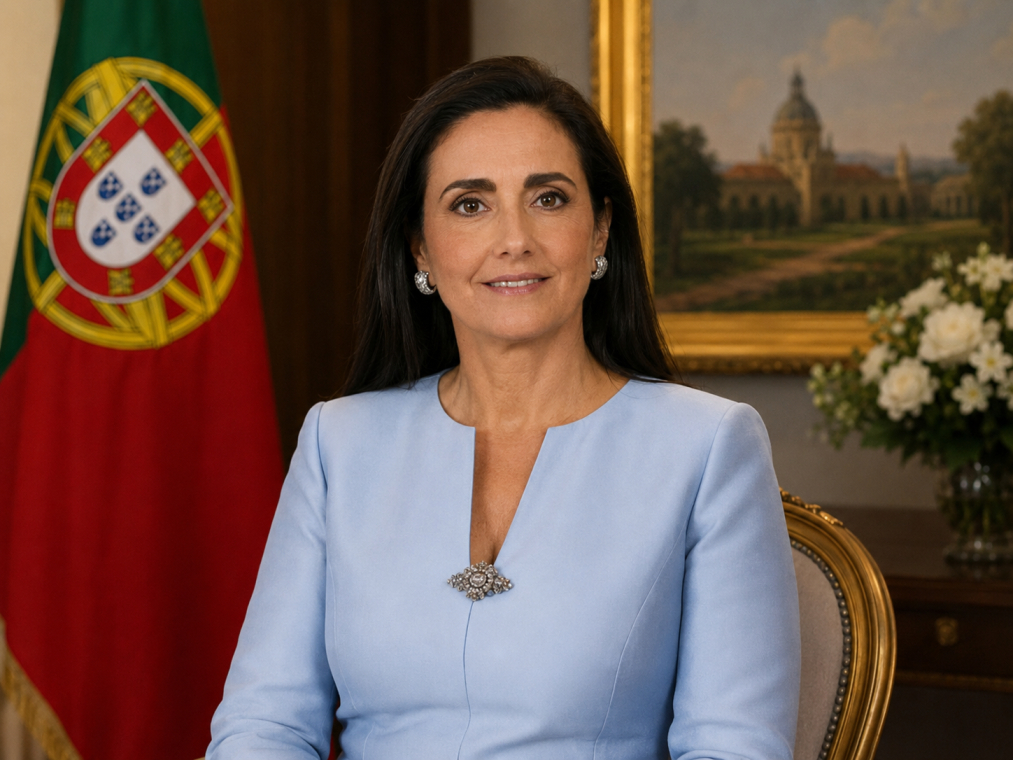
The Quiet Confidence of a Modern First Lady
Some public figures spend years preparing for national attention. Others arrive in it almost unexpectedly, their lives transformed by events larger than themselves. For Margarida Maldonado Freitas, becoming Portugal’s First Lady marked not the beginning of a new identity, but the continuation of one already defined by professional commitment, discretion, and public service.
As the wife of President António José Seguro, who took office on 9 March 2026, she assumed one of Portugal’s most visible ceremonial roles at a moment when expectations of public figures are changing. Increasingly, citizens look beyond titles and appearances, placing greater value on authenticity, competence, and integrity. Against this backdrop, her decision to remain connected to her profession as a pharmacist has become one of the earliest defining features of her public profile.
Although comparatively little has been made public about her private life, the facts that are known provide a meaningful starting point for understanding the significance of her role—not only within Portugal, but also in the broader conversation about women, leadership, and public life in the twenty-first century.
A Foundation Built on Science and Service
Before entering Portugal’s presidential residence, Margarida Maldonado Freitas built her professional life in healthcare.
As a pharmacist, she belongs to a profession grounded in scientific knowledge, precision, ethical responsibility, and lifelong learning. Pharmacists occupy a unique position within healthcare systems, serving as trusted professionals who help ensure the safe and effective use of medicines while supporting patients, physicians, and broader public-health goals.
This background is notable because it reflects expertise developed independently of political office. It represents years of education, professional training, and practical experience—qualities that remain part of her identity regardless of her public role.
In an era when many public figures are known primarily for their political visibility, her career reminds observers that public influence can emerge from professions dedicated to knowledge and service.
A New Role in Portuguese Public Life
On 9 March 2026, António José Seguro was inaugurated as President of Portugal. With his inauguration, Margarida Maldonado Freitas became the country’s First Lady.
Unlike the presidency itself, the position of First Lady in Portugal is not a constitutional office. It carries no executive authority, legislative responsibility, or formal political mandate. Instead, it is a ceremonial and representative role that often involves accompanying the President during official engagements, participating in state visits, attending cultural and charitable events, and supporting initiatives that reflect the values of public service.
Each First Lady has approached the position differently, shaped by her own background, interests, and professional experience. The role allows considerable personal discretion, enabling its holder to determine how visible she wishes to be and which causes she may choose to support.
Remaining a Professional
One of the earliest and most widely discussed aspects of Margarida Maldonado Freitas’ public profile has been her intention to continue working as a pharmacist after becoming First Lady.
Although the role naturally brings new ceremonial responsibilities, her decision illustrates an increasingly common understanding of public life: professional identity and public service need not be mutually exclusive.
This reflects broader social changes experienced across Europe and beyond. Many women today pursue careers while simultaneously assuming leadership, civic, family, and community responsibilities. Rather than viewing these roles as competing, contemporary society increasingly recognizes that they can complement one another.
Her professional continuity therefore carries symbolic importance. It suggests that assuming a highly visible public position does not necessarily require abandoning years of education, expertise, or vocational commitment.
The Evolution of Public Expectations
The role of a First Lady has changed considerably over the past century.
Historically, spouses of heads of state were often expected to remain largely behind the scenes, their contributions measured primarily through protocol and representation. Today, expectations are more varied. Many First Ladies around the world are accomplished professionals in fields ranging from medicine and education to law, business, science, and academia.
Public interest increasingly extends beyond ceremonial appearances. Citizens often seek to understand the experiences, values, and expertise that individuals bring to public life.
Against this backdrop, Margarida Maldonado Freitas represents a contemporary model in which professional accomplishment remains an integral part of public identity rather than something set aside upon entering national life.
Science, Trust, and Public Confidence
Healthcare professionals occupy positions of exceptional public trust.
Their work depends upon evidence, careful judgment, confidentiality, and ethical responsibility. These qualities have become especially visible in recent decades as healthcare systems around the world have faced significant public-health challenges.
Although the responsibilities of a pharmacist differ fundamentally from those of political office, both fields share an important principle: decisions can have meaningful consequences for the wellbeing of others.
This shared emphasis on responsibility contributes to the public interest surrounding her background and offers a distinctive perspective within Portugal’s presidential household.
Representation Beyond Ceremony
Modern public representation extends beyond formal events.
It includes the example public figures set through their choices, priorities, and professional lives.
Without exercising political power, First Ladies often contribute to public conversations by highlighting education, healthcare, culture, scientific literacy, social inclusion, or charitable initiatives. Their influence is frequently measured less by legislation than by visibility, advocacy, and the ability to bring attention to important issues.
The flexibility of the role allows each individual to shape her own contribution while remaining within the constitutional framework of the presidency.
Women in Public Life
The growing presence of women in senior public roles reflects one of the defining developments of modern democratic societies.
Across government, healthcare, academia, business, diplomacy, and scientific research, women continue to contribute at the highest levels of professional achievement. Their participation strengthens institutions by broadening perspectives and expanding the range of experience represented in decision-making and public life.
Figures such as Margarida Maldonado Freitas illustrate another important aspect of this progress: visibility need not come at the expense of professional identity.
Rather than symbolizing a departure from previous achievements, public prominence can exist alongside an established career built through education, expertise, and sustained effort.
Public Service in a Changing World
Portugal enters the second half of the 2020s facing many of the same questions confronting democracies around the world: how to strengthen public trust, encourage civic participation, support scientific progress, and address the evolving needs of society.
Although constitutional responsibility for these matters rests with elected institutions, the symbolic role of national representatives remains significant.
Public figures help shape the tone of civic life through example as much as through formal responsibility. Respect for institutions, professionalism, and commitment to service contribute to public confidence in ways that extend beyond politics alone.
A Story Still Unfolding
Unlike biographies written at the end of a long public career, the story of Margarida Maldonado Freitas is still in its opening chapters.
Future years will determine which causes she supports, the initiatives with which she becomes associated, and the legacy she ultimately leaves as Portugal’s First Lady.
For now, the publicly documented facts present a portrait of a healthcare professional who entered one of her country’s most visible ceremonial positions while retaining the identity she had built long before national attention arrived.
It is a story marked not by dramatic transformation, but by continuity.
In a public culture that often rewards spectacle, continuity can itself be remarkable.
Whether remembered for advocacy, public engagement, or simply for demonstrating that professional expertise and public representation can coexist, Margarida Maldonado Freitas represents a contemporary understanding of service—one in which accomplishment is measured not solely by office or title, but by the enduring value of knowledge, responsibility, and quiet dedication.
As her public life continues to evolve, history will determine the full measure of her contribution. For now, her biography remains one of promise: a life grounded in professional achievement, called to national representation, and poised to define its own place in Portugal’s democratic tradition.
- 24 October 1971
- Portugal
- António José Seguro
- 9 March 2026- Present
