



Marta Nawrocka
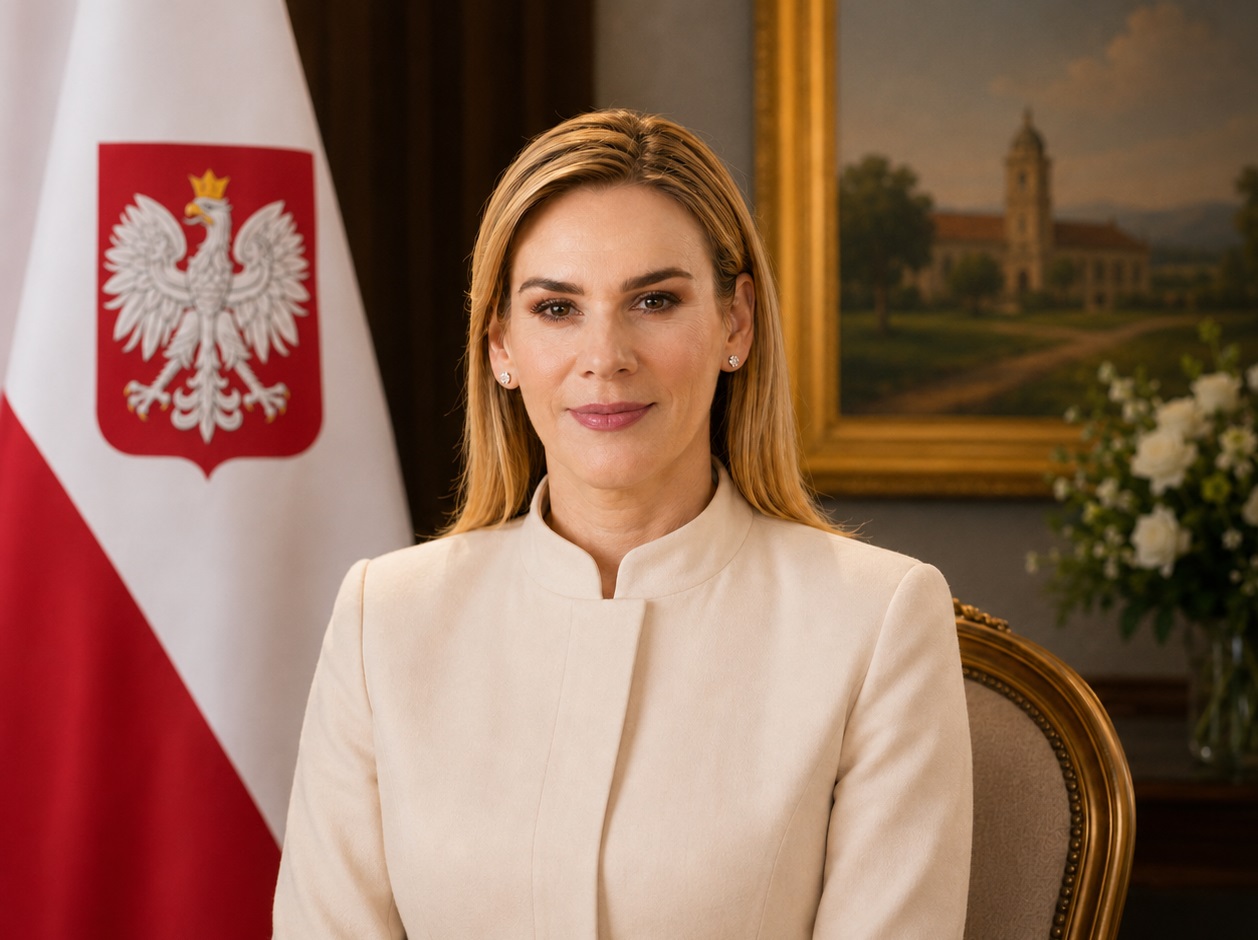
Lawyer, public servant and First Lady of the Republic of Poland
Before entering public life, she spent nearly two decades serving within Poland’s National Revenue Administration, where she specialized in combating economic crime, including illegal gambling, tax fraud and the trade of counterfeit goods. Her career reflects a long-standing commitment to public service, integrity and the protection of the country’s financial interests.
Although she became internationally known after assuming the role of First Lady on 6 August 2025, Nawrocka’s life story began long before national recognition. Raised in the Baltic city of Gdynia, she built her life through education, discipline and years of professional experience rather than through political involvement. Her journey is one of gradual personal growth, illustrating how determination, family values and dedication to public service can shape an ordinary life into one of national significance.
Throughout her public appearances, Nawrocka has presented herself as approachable, composed and family-oriented. Rather than seeking the spotlight, she has emphasized authenticity, responsibility and the importance of remaining connected to everyday Polish society. These qualities have helped define her public image as a First Lady whose identity rests not only on her ceremonial role but also on her own professional achievements and personal character.
Early Life and Family Background
Marta Nawrocka was born and raised in Gdynia, a modern port city on Poland’s Baltic coast. Growing up in a city closely associated with maritime traditions, resilience and economic development exposed her to an environment where hard work and community spirit were highly valued.
Little has been publicly disclosed about her parents or extended family, reflecting her preference for maintaining their privacy. Nevertheless, available information suggests that she experienced a stable upbringing in which education, discipline and respect for others were encouraged from an early age. These values would later become evident in both her professional career and her approach to family life.
Her childhood unfolded during a transformative period in Polish history. As Poland transitioned politically and economically during the 1990s, young people of her generation witnessed profound social change. Growing up during this era likely influenced her appreciation for public institutions, the rule of law and the responsibilities of citizenship.
Childhood and the Discipline of Ballet
One of the defining features of Nawrocka’s early life was her commitment to ballet. She trained in classical ballet during her childhood and adolescence, dedicating many years to an art form renowned for its demanding physical and mental discipline.
Ballet requires exceptional perseverance, precision and resilience. Long hours of practice, continuous self-improvement and the pursuit of excellence develop qualities that extend well beyond the stage. These experiences helped cultivate patience, self-control and determination—traits that later became evident in her professional life.
Although she ultimately chose a career in law and public administration rather than the performing arts, ballet remained an important influence on her personal development. The discipline acquired through dance contributed to her confidence, composure and work ethic, characteristics frequently associated with her public appearances.
Education and Academic Development
Following her secondary education, Nawrocka pursued higher education in law at the University of Gdańsk, one of Poland’s leading public universities. Her legal studies provided a comprehensive understanding of constitutional principles, administrative law, criminal law and the legal foundations necessary for public administration.
Studying law demanded analytical thinking, careful interpretation of legislation and the ability to solve complex problems—skills that would later prove essential in her professional responsibilities.
Her academic training reflected an interest not only in legal theory but also in practical public service. Rather than entering private legal practice, she chose a career dedicated to protecting the public interest through government institutions.
Career in Public Service
After completing her education, Nawrocka joined Poland’s National Revenue Administration, embarking on a career that would span approximately eighteen years before becoming First Lady.
Her work focused primarily on combating forms of economic crime that undermine both public finances and consumer confidence. Her responsibilities included efforts against illegal gambling operations, tax-related offences and the circulation of counterfeit products.
Economic crime often operates beyond public attention but carries significant consequences for governments, businesses and ordinary citizens. By contributing to investigations and enforcement activities, Nawrocka participated in safeguarding public revenue and supporting fair economic competition.
Her professional career demanded discretion, legal expertise and a strong sense of ethical responsibility. Unlike many public figures, her work occurred largely behind the scenes, where success depended upon careful analysis, cooperation with colleagues and strict adherence to legal procedures rather than public recognition.
Her years in public administration established her reputation as a diligent and dependable civil servant committed to the effective functioning of state institutions.
Personal Life and Family
Away from public office, Nawrocka has consistently placed family at the centre of her life. She is a wife and mother who has sought to balance professional responsibilities with family commitments.
She and her husband have raised their children while maintaining an emphasis on stability, education and mutual support. Even after assuming the responsibilities associated with Poland’s highest public office, she has continued to portray family life as one of her greatest priorities.
Her approach to motherhood reflects values shared by many Polish families: encouraging personal development, providing emotional support and creating a secure home environment. Rather than presenting herself as distant or ceremonial, she has embraced an image grounded in everyday experiences familiar to parents across the country.
Character and Personal Values
Observers frequently describe Nawrocka as calm, thoughtful and approachable. Her years in public service required professionalism, discretion and careful judgement, qualities that remain evident in her public engagements.
She has demonstrated a preference for substance over publicity, allowing her work and conduct to speak for themselves. This reserved style has contributed to an image of authenticity that resonates with many members of the public.
Discipline acquired through ballet, analytical thinking developed through legal education and practical experience gained during nearly two decades of government service together shaped a personality characterised by resilience, responsibility and quiet confidence.
Transition into the Role of First Lady
Upon assuming the position of First Lady on 6 August 2025, Nawrocka entered a role requiring both ceremonial representation and meaningful public engagement.
Unlike many public figures whose careers begin in politics, her background lay in professional public service. This distinction has influenced public perceptions of her as someone whose understanding of government derives from practical institutional experience rather than partisan activity.
As First Lady, she has expressed interest in supporting initiatives relating to children, families, education and social well-being while representing Poland with dignity during official engagements.
Public Image
Marta Nawrocka’s public image is shaped less by political identity than by personal authenticity. Her story resonates with many Poles because it reflects experiences familiar to ordinary citizens: growing up in a regional city, pursuing education, building a professional career through hard work, raising a family and gradually accepting greater public responsibilities.
Rather than projecting glamour or celebrity, she has cultivated an image of quiet competence. Her professional achievements, combined with her emphasis on family and service, have positioned her as a relatable figure whose life demonstrates that national prominence can emerge from years of consistent dedication rather than sudden public attention.
Legacy in Progress
As Poland’s First Lady, Marta Nawrocka remains at the beginning of a role that will continue to evolve over time. While history has yet to fully assess her contributions, her journey already illustrates several enduring themes: the value of education, the importance of disciplined self-improvement, commitment to public service and devotion to family.
Her life reflects the experiences of many ordinary Polish women who have balanced career aspirations with family responsibilities while remaining dedicated to their communities. From a childhood shaped by ballet in Gdynia to a distinguished legal career protecting Poland’s economic interests and ultimately to becoming First Lady, Nawrocka’s story is one of steady perseverance rather than dramatic transformation.
Her biography demonstrates that leadership can be expressed not only through political office or public speeches but also through integrity, professional excellence, compassion and a willingness to serve others. As her tenure as First Lady continues, these qualities are likely to remain central to both her public work and her enduring contribution to Polish society.
- 7 March 1986
- Poland
- Karol Nawrocki
- 6 August 2025 – Present
