



Mirabela Grădinaru
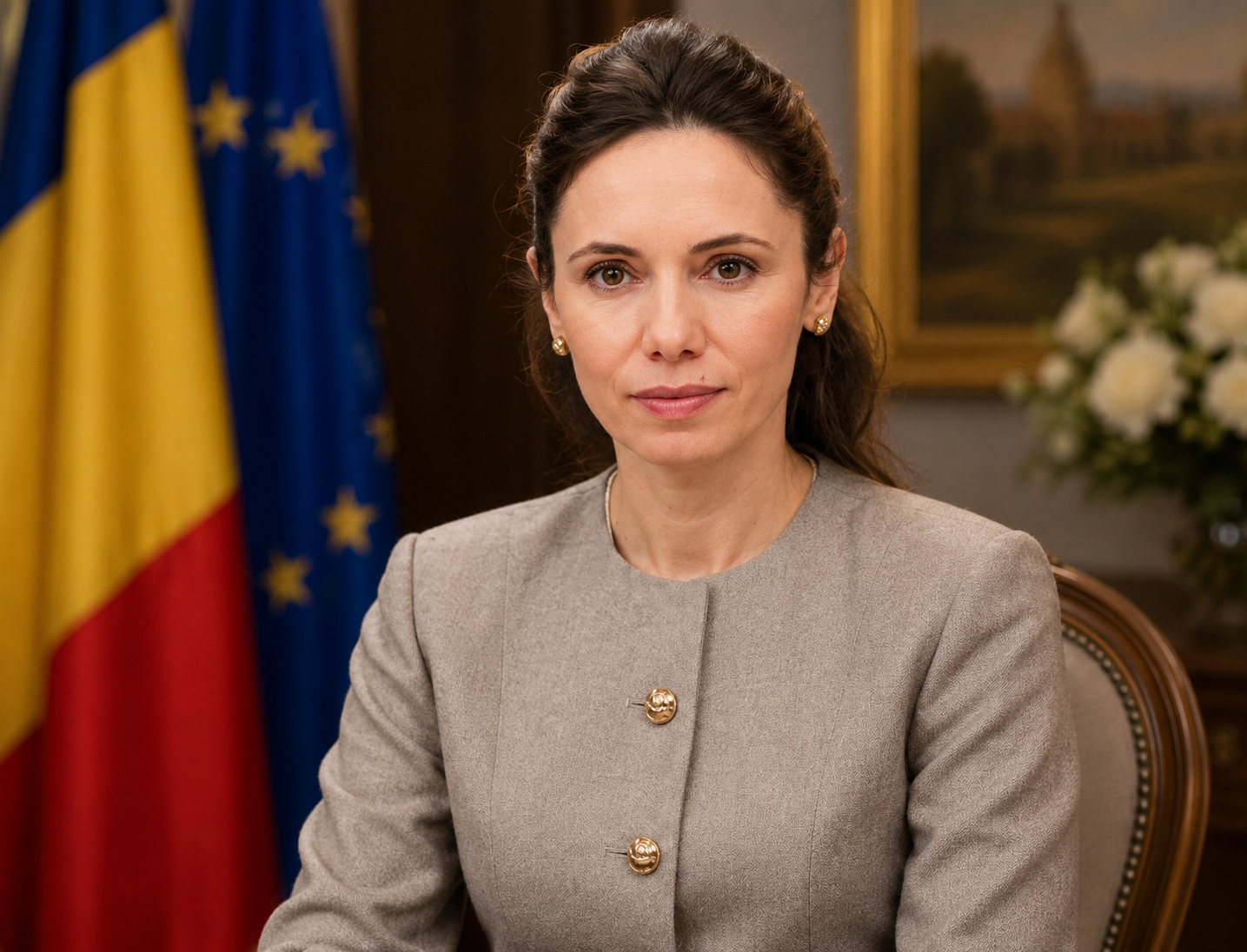
Role as First Lady
Mirabela Grădinaru is the First Lady of Romania, having assumed the country’s highest ceremonial female role on 26 May 2025, following the inauguration of President Nicușor Dan. Although Romania has never formally established the constitutional office of First Lady, the position has long carried symbolic significance, representing the nation alongside the Head of State during official ceremonies, diplomatic engagements, humanitarian initiatives, and occasions of national importance.
Since entering public life, Grădinaru has cultivated a public identity distinguished by professionalism, dignity, and authenticity. Unlike many spouses of political leaders who become prominent through politics itself, she entered the national spotlight after building an accomplished career in the private sector. Her years in business leadership, together with her measured personality and commitment to family life, have shaped a style of public service that is thoughtful, understated, and deeply human.
Her emergence as First Lady has coincided with a period in which Romanians have increasingly valued integrity, competence, and moderation in public figures. Rather than seeking personal prominence, she has consistently projected the image of a woman whose greatest strengths lie in preparation, quiet confidence, and an unwavering sense of responsibility. These qualities have allowed her to represent Romania with grace while preserving the authenticity that characterized her life long before she became a national figure.
As First Lady, Mirabela Grădinaru embodies a contemporary understanding of public service—one that combines professional achievement with compassion, civic engagement, and an enduring belief that meaningful leadership begins with respect for people and institutions alike.
Date of Birth
1984
No credible official or mainstream source has publicly disclosed her exact day and month of birth.
Family Origins and Early Life
Mirabela Grădinaru was born in 1984 in Vaslui, a historic city in eastern Romania whose traditions, resilience, and close-knit communities helped shape her early outlook on life. Situated within the historical region of Moldavia, Vaslui is known for its rich cultural heritage and for generations of families whose lives have been defined by perseverance, education, and strong communal values.
Growing up in this environment, Grădinaru developed many of the characteristics that would later become central to her public identity. Although she has chosen to keep much of her childhood private, her life reflects the experiences of many Romanians who understood that personal success was achieved through determination, discipline, and continuous learning rather than privilege.
From an early age, she demonstrated an appreciation for knowledge and intellectual curiosity. Teachers and peers reportedly recognized her as diligent and conscientious, qualities that would remain consistent throughout her academic and professional life. While some individuals seek recognition through visibility, Grădinaru appeared comfortable allowing her work, rather than publicity, to define her accomplishments.
Her upbringing instilled a profound respect for family, education, and personal responsibility. These values would later influence both her professional career and her understanding of public service, enabling her to connect naturally with citizens from diverse backgrounds.
Like many young Romanians pursuing higher education, she eventually left her hometown for Bucharest. This transition represented not merely a geographical change but the beginning of a journey marked by personal growth, academic achievement, and increasing professional responsibility. Moving from a provincial city to Romania’s capital introduced her to broader cultural, educational, and professional opportunities while strengthening the adaptability that would become one of her defining traits.
Throughout these formative years, Grădinaru cultivated a quiet confidence rooted in preparation rather than ambition for public recognition. The foundations established during her childhood would remain evident decades later as she entered one of the country’s most visible public roles.
Education and Intellectual Development
Education has been one of the defining influences throughout Mirabela Grădinaru’s life. Believing that learning provides the foundation for personal independence and social progress, she pursued higher education at the University of Bucharest, one of Romania’s oldest and most respected academic institutions.
She graduated from the Faculty of Geography, specializing in Geography and French. Her academic studies provided a multidisciplinary understanding of physical landscapes, human geography, environmental systems, regional development, and international perspectives. Combined with language studies, this education strengthened her analytical abilities while enhancing her communication skills and cultural awareness.
The study of geography extends far beyond maps and locations; it explores the relationships between people, communities, economies, and environments. Such an academic background encourages systematic thinking, problem-solving, and an appreciation for the diversity of societies—qualities that later proved valuable in both corporate leadership and public representation.
Her university years also exposed her to a rapidly changing Romania, a nation continuing its transformation within Europe. Witnessing these developments firsthand reinforced the importance of adaptability, innovation, and lifelong learning.
Unlike individuals whose education serves primarily as a pathway into politics, Grădinaru viewed higher education as preparation for professional excellence. Her commitment to academic achievement reflected a broader philosophy that competence and credibility are earned through sustained effort rather than inherited status.
Even after completing her studies, she continued to value continuous professional development. Her career demonstrates that education is not merely the acquisition of qualifications but an ongoing process of intellectual growth, ethical reflection, and practical application.
These educational experiences laid the groundwork for a successful corporate career while preparing her—perhaps unknowingly—for the responsibilities she would eventually assume as Romania’s First Lady.
Professional Career
Long before becoming one of Romania’s most recognizable public figures, Mirabela Grădinaru established herself as a respected professional within the private sector. Her career reflects years of dedication, organizational excellence, and leadership developed outside the sphere of politics.
She joined the Romanian operations of an international automotive company, where she steadily advanced through positions requiring increasing responsibility. Her progression within a highly competitive corporate environment illustrated both her technical competence and her ability to lead diverse teams while maintaining high professional standards.
Working within the automotive industry demands precision, strategic planning, effective communication, and the capacity to solve complex organizational challenges. These experiences strengthened her leadership abilities while cultivating qualities such as patience, resilience, accountability, and careful decision-making.
Unlike public office, success in the corporate sector is measured primarily through performance, consistency, and the confidence earned from colleagues and stakeholders. Grădinaru’s career therefore became an independent testament to her capabilities, separate from any future public role.
Her professional background also distinguishes her among contemporary European first ladies. Rather than emerging solely through political association, she entered public life with years of managerial experience, financial responsibility, organizational leadership, and practical problem-solving.
Those experiences continue to influence the manner in which she approaches ceremonial duties and public engagement. Her organizational discipline, attention to detail, and collaborative style reflect habits developed throughout years of professional management rather than political campaigning.
Her career demonstrates that modern public representatives increasingly bring diverse professional experiences to national life, enriching public institutions with perspectives developed beyond government itself.
Character and Personal Philosophy
One of the defining characteristics of Mirabela Grădinaru’s public image is her remarkable consistency between private professionalism and public service. Throughout the years, she has projected an image of calm determination, modesty, and thoughtful leadership.
Rather than seeking media attention, she has consistently preferred meaningful work over personal publicity. This reserved approach has contributed significantly to her reputation as a trustworthy and authentic public figure.
Observers frequently describe her as composed, articulate, and empathetic. These qualities have enabled her to navigate the transition from private citizen to First Lady without abandoning the humility that defined her earlier life.
Central to her philosophy is the belief that leadership is fundamentally about service. Whether managing professional responsibilities, supporting charitable initiatives, or representing Romania internationally, she has consistently emphasized preparation, responsibility, and respect for others.
She also appears to value collaboration over confrontation, believing that durable progress is achieved through dialogue, patience, and shared purpose rather than division.
Her public conduct suggests a broader conviction that influence is measured not by visibility alone but by the positive difference one makes in the lives of others.
This philosophy has become increasingly evident as she embraces the responsibilities of First Lady, demonstrating that quiet leadership can often possess enduring strength.
Relationship and Family Life
Among the many aspects of Mirabela Grădinaru’s life that have attracted public interest, none has been more widely discussed than the enduring partnership she has built with Nicușor Dan. Yet, despite increasing public attention, their relationship has remained remarkably private, grounded not in political ambition but in mutual respect, shared values, and a commitment to family life.
The couple first met in 2005 while both were living and working in Bucharest. At the time, neither could have anticipated the prominent public roles they would eventually occupy. Their relationship developed gradually over the years, built upon intellectual compatibility, trust, and an appreciation for one another’s personal ambitions and principles.
Unlike many political couples whose lives unfold in the public eye from the outset, Grădinaru and Dan spent much of their relationship outside the national spotlight. This period allowed them to establish a stable family foundation before public responsibilities became a defining feature of their lives. Throughout these years, Grădinaru continued to pursue her professional career while supporting her partner’s growing civic and political engagement without seeking recognition for herself.
One of the distinguishing features of their partnership has been their decision not to marry despite maintaining a committed, long-term relationship. In Romania, where traditional family structures remain deeply valued, this decision occasionally generated public discussion. Nevertheless, the couple consistently demonstrated that commitment is measured by mutual responsibility, trust, and shared purpose rather than solely by legal status.
Their relationship has often been characterized by a quiet stability rarely seen in modern public life. Rather than cultivating carefully managed public appearances, they have projected an image of authenticity, preferring genuine family experiences over media attention. This approach has resonated with many Romanians, who view the couple as approachable and grounded despite their prominent positions.
As parents, Mirabela Grădinaru and Nicușor Dan have sought to provide their children with as normal an upbringing as possible. They are the parents of two children, Aheea and Antim, whose privacy has been carefully protected throughout their father’s political career.
Grădinaru has repeatedly demonstrated that motherhood occupies a central place in her identity. Even while balancing professional responsibilities and later assuming the role of First Lady, she has emphasized the importance of creating a secure, loving, and educationally enriching environment for her children. Her approach reflects a belief that strong families provide the foundation for healthy societies.
Friends and observers have frequently noted the family’s preference for simplicity. Rather than embracing an extravagant lifestyle often associated with high public office, they have consistently presented themselves as a family committed to ordinary routines, responsible parenting, and modest living.
These values have significantly influenced Grădinaru’s public image. Many Romanians recognize in her a reflection of contemporary working mothers who successfully balance professional achievement with family responsibilities. Her ability to navigate these multiple roles has made her an inspiring figure for women pursuing both career and family aspirations.
Throughout her years alongside Nicușor Dan, Grădinaru demonstrated remarkable resilience. Political campaigns, intense media scrutiny, and the demands of public life inevitably placed pressure upon the family, yet she consistently maintained composure while avoiding unnecessary controversy or personal publicity.
Her quiet support never sought to overshadow her own identity. Instead, it reflected a partnership founded upon equality, mutual encouragement, and shared responsibility. This balanced relationship has become one of the defining characteristics of her public persona and illustrates her belief that enduring partnerships are built through cooperation rather than competition.
Transition into Public Life
For nearly two decades, Mirabela Grădinaru remained primarily known within professional and personal circles rather than national public life. While her partner became one of Romania’s most recognizable political figures, she consciously maintained a lower public profile, continuing her corporate career and focusing on family responsibilities.
This deliberate distance from politics contributed significantly to her credibility when she eventually entered public life. Rather than appearing as someone seeking influence through proximity to power, she was widely perceived as an accomplished professional who had built an independent career before assuming ceremonial responsibilities.
The 2025 presidential election marked a turning point not only for Romania but also for Grădinaru personally. Following Nicușor Dan’s election to the presidency, she entered a role that demanded visibility, diplomacy, and national representation on an unprecedented scale.
The transition required considerable adjustment. Moving from corporate leadership to one of the country’s most closely observed public positions meant adapting to constant media attention, increased security, diplomatic protocol, and public expectations.
Despite these new demands, Grădinaru approached the transition with characteristic composure. Rather than attempting to redefine herself, she chose to remain faithful to the values and professional habits that had guided her throughout her life. This continuity helped establish public confidence in her ability to fulfill the responsibilities associated with being First Lady.
Her first appearances following the presidential inauguration were marked by understated elegance and confidence. Commentators frequently observed that she appeared comfortable without seeking to dominate public attention, allowing her presence to complement rather than compete with official state occasions.
During these early months, Grădinaru participated in ceremonial events, commemorative services, cultural celebrations, and meetings with representatives of Romanian civil society. Each appearance gradually expanded public understanding of the type of First Lady she intended to become—one defined by thoughtful engagement rather than personal publicity.
Her transition also highlighted the increasing diversity of backgrounds represented among European first ladies. Coming from the private sector rather than politics, she brought valuable experience in management, organization, and teamwork to her new responsibilities.
This professional perspective has influenced her approach to public service, emphasizing preparation, careful planning, collaboration, and long-term thinking.
The Evolution of a Public Figure
Assuming the role of First Lady inevitably transformed Mirabela Grădinaru into one of Romania’s most visible women. Yet this transformation did not occur overnight. Instead, it represented the gradual evolution of a private citizen into a respected national representative.
Unlike personalities who thrive on constant publicity, Grădinaru’s growing influence has emerged through consistency rather than spectacle. Every public appearance, official engagement, and charitable initiative has contributed to an image built on reliability and authenticity.
Observers have frequently remarked upon her natural ability to communicate warmth without sacrificing professionalism. Whether interacting with children, educators, healthcare workers, diplomats, or ordinary citizens, she conveys attentiveness and respect, qualities that have strengthened public confidence in her representative role.
Her measured communication style reflects years of corporate leadership, where careful listening and constructive dialogue often prove more valuable than dramatic public statements. This experience has translated effectively into public life, enabling her to engage with diverse audiences while maintaining dignity and composure.
As her experience in the role has grown, so too has her confidence. Rather than remaining solely a ceremonial figure, she has increasingly become an advocate for education, family well-being, civic responsibility, and community development—areas that closely reflect her personal values and professional background.
Balancing Privacy and Public Responsibility
Perhaps one of Mirabela Grădinaru’s greatest achievements has been her ability to balance increasing public responsibilities with an enduring commitment to personal privacy.
In an age dominated by continuous media exposure and social media visibility, she has chosen a markedly different path. She has demonstrated that effective public service does not require constant self-promotion, but rather consistency, preparation, and meaningful engagement.
This balance has allowed her to preserve the authenticity that distinguished her long before entering public life. While fulfilling the ceremonial obligations expected of Romania’s First Lady, she has continued to protect the private sphere of her family, believing that some aspects of life remain most meaningful when experienced away from public attention.
Her example reflects a broader philosophy that public office should enhance opportunities for service rather than diminish personal integrity.
By maintaining this careful equilibrium, Mirabela Grădinaru has contributed to a renewed understanding of modern public leadership—one in which professionalism, humility, and compassion coexist with visibility and national responsibility.
Life as First Lady
With the inauguration of Romania’s new presidential administration on 26 May 2025, Mirabela Grădinaru entered one of the most visible and symbolically important chapters of her life. Although the office of First Lady is not formally established under the Romanian Constitution, the position has long carried profound national significance. It serves as a bridge between the Presidency and society, reflecting the nation’s values through service, representation, and public engagement.
For Grădinaru, becoming First Lady was not simply the assumption of a ceremonial title. It marked the beginning of a new form of public service, one requiring diplomacy, compassion, cultural awareness, and the ability to represent millions of Romanians with dignity and authenticity.
Unlike elected officials, the First Lady exercises influence without legislative authority. Her effectiveness depends almost entirely upon personal credibility, public trust, and the ability to unite rather than divide. Recognizing this unique responsibility, Grădinaru has approached the role with restraint and professionalism, allowing her actions rather than political statements to define her public identity.
From her earliest appearances, she demonstrated an understanding that every engagement—whether attending a state ceremony, visiting a school, supporting a charitable initiative, or welcoming foreign guests—contributes to the image Romania presents to its own citizens and to the international community.
Rather than attempting to redefine the office through dramatic innovation, she has focused on strengthening its traditional purpose: representing the human dimension of the Presidency through empathy, accessibility, and civic responsibility.
National Representation
As First Lady, Mirabela Grădinaru serves among the country’s foremost civilian representatives, participating in events that celebrate Romania’s history, culture, scientific achievements, and social progress.
Her responsibilities include accompanying the President during major state ceremonies, attending national commemorations, recognizing outstanding citizens, and participating in cultural and educational events throughout the country. Through these appearances, she symbolizes continuity between Romania’s institutions and its people.
One of the defining characteristics of her public engagements has been the genuine attention she gives to those she meets. Whether speaking with educators, healthcare professionals, artists, volunteers, entrepreneurs, or students, she has consistently emphasized dialogue rather than formality.
Her visits to communities extend beyond protocol. They provide opportunities to understand local challenges, celebrate achievements, and encourage initiatives that strengthen Romanian society from the grassroots upward.
Education has emerged as a recurring theme in her public appearances. She has repeatedly highlighted the importance of investing in schools, teachers, and young people, recognizing education as one of the country’s most valuable long-term investments.
Similarly, her interactions with healthcare workers, social organizations, and charitable institutions reflect an appreciation for those whose daily work improves the lives of others, often without public recognition.
Through these engagements, Grădinaru demonstrates that national representation is not limited to grand ceremonies. It also consists of acknowledging ordinary citizens whose dedication contributes to the well-being and development of Romania.
International Representation and Diplomatic Role
Although diplomacy remains the constitutional responsibility of the President and the Government, the First Lady occupies an important complementary position within Romania’s international representation.
During official state visits, diplomatic receptions, and meetings with foreign delegations, Mirabela Grădinaru contributes to fostering goodwill through courtesy, cultural understanding, and respectful dialogue.
In international settings, she represents not merely the Presidential family but also Romanian society, culture, and values. Her conduct reflects the traditions of hospitality for which Romania has long been known while presenting a modern image of professionalism and confidence.
Meetings with the spouses of foreign heads of state provide valuable opportunities for cultural exchange and the development of relationships that often extend beyond formal diplomacy. These interactions frequently focus upon shared humanitarian concerns such as education, children’s welfare, healthcare, culture, and community development.
Grădinaru’s professional background provides an additional dimension to these engagements. Having spent many years within an international corporate environment, she possesses experience working across organizational cultures, communicating with diverse groups, and adapting to different professional contexts.
These experiences enhance her ability to represent Romania with confidence while demonstrating respect for the customs and traditions of other nations.
Her diplomatic style is characterized less by ceremony than by genuine interpersonal connection. Through attentive listening, thoughtful conversation, and sincere interest in the experiences of others, she contributes to strengthening Romania’s international relationships in subtle yet meaningful ways.
Advocacy for Education
Education occupies a central place in Mirabela Grădinaru’s understanding of national development.
Having personally benefited from quality higher education, she recognizes learning as one of the most powerful instruments through which individuals transform both their own lives and the future of their communities.
Throughout her public engagements, she has emphasized that education extends beyond classrooms and examinations. It includes the development of curiosity, ethical judgment, creativity, resilience, and civic responsibility.
She has expressed admiration for teachers whose dedication shapes future generations despite often facing significant professional challenges. Their work, she believes, deserves greater recognition because strong educational systems ultimately strengthen every aspect of national life.
Grădinaru also appreciates the importance of lifelong learning. Her own transition from university graduate to corporate manager and eventually to First Lady illustrates how education remains an ongoing process rather than a stage limited to youth.
Her advocacy encourages young Romanians to pursue excellence not solely for personal success but also for the benefit of society as a whole.
Commitment to Children and Families
Perhaps no aspect of Mirabela Grădinaru’s public identity reflects her personal values more clearly than her commitment to children and families.
As both a professional and a mother, she understands the opportunities and challenges faced by modern families attempting to balance careers, education, health, and personal well-being.
Her interactions with children frequently reveal warmth, patience, and genuine interest. Whether visiting schools, hospitals, cultural institutions, or community organizations, she emphasizes the importance of creating environments in which every child can develop confidence, curiosity, and hope.
She has consistently promoted the belief that children flourish when surrounded by supportive families, dedicated educators, and compassionate communities.
Her understanding of family extends beyond traditional definitions, encompassing the broader networks of relationships that nurture individuals throughout their lives.
By encouraging dialogue between parents, educators, healthcare professionals, and local communities, she seeks to strengthen the social foundations upon which future generations depend.
Support for Community Development
Mirabela Grădinaru believes that national progress begins within local communities.
Throughout Romania, thousands of volunteers, teachers, healthcare workers, entrepreneurs, artists, and civic organizations contribute daily to improving the quality of life for others. Although their efforts often receive little public attention, Grădinaru has consistently acknowledged their importance.
Her public engagements frequently celebrate initiatives that promote cooperation, volunteerism, environmental stewardship, cultural preservation, and social inclusion.
She recognizes that lasting development rarely results from isolated actions. Instead, it emerges when citizens work together to solve shared challenges while respecting one another’s experiences and perspectives.
This philosophy aligns closely with her own leadership style, which emphasizes collaboration rather than individual recognition.
Leadership Through Example
Unlike political leadership, which often depends upon legislation and executive authority, the influence of a First Lady arises primarily through personal example.
Mirabela Grădinaru has embraced this understanding from the beginning of her tenure.
Rather than relying upon speeches alone, she seeks to communicate values through consistent conduct. Courtesy, punctuality, preparation, respect, and empathy have become hallmarks of her public service.
Her years in corporate leadership reinforced the principle that trust is earned gradually through reliability rather than dramatic gestures. This perspective continues to guide her approach as First Lady.
Many observers have remarked that her calm demeanor creates an atmosphere of reassurance during public engagements. She rarely dominates conversations, preferring instead to encourage dialogue and highlight the contributions of others.
This quiet confidence has become one of her defining strengths.
A Modern Vision of Public Service
Mirabela Grădinaru represents a generation of public figures whose influence extends beyond traditional political boundaries.
Her life illustrates that meaningful public service can emerge from professional excellence, ethical leadership, and sustained community engagement rather than from political ambition alone.
As First Lady, she has sought to demonstrate that visibility should always be accompanied by responsibility. Every appearance, every conversation, and every initiative offers an opportunity to encourage unity, strengthen institutions, and inspire confidence in the future.
By remaining true to the principles that guided her long before entering public life, she has helped redefine the image of Romania’s First Lady for the twenty-first century.
Her tenure continues to evolve, yet the foundations upon which it rests—integrity, professionalism, compassion, humility, and respect for others—already suggest a legacy rooted not in political influence but in service to the Romanian people.
Legacy
Although Mirabela Grădinaru’s tenure as First Lady is still in its early years, the foundations of her legacy have already begun to emerge. Unlike historical figures whose reputations were shaped by political ambition or constitutional authority, her influence has developed through consistency of character, professional accomplishment, and an unwavering commitment to serving others with dignity.
Her journey reflects a broader transformation in the role of the modern First Lady. Increasingly, the position is no longer viewed solely through the lens of ceremonial appearances or public symbolism. Instead, it represents an opportunity to promote values that strengthen society while serving as a bridge between national institutions and ordinary citizens.
Grădinaru has approached this responsibility with a clear understanding that the most enduring legacies are seldom created through dramatic moments alone. They are built gradually through thousands of interactions, thoughtful decisions, and the trust earned over time.
Should this approach continue throughout her years as First Lady, she is likely to be remembered as one of the women who contributed to redefining the office for a new generation of Romanians—one in which professionalism, compassion, and authenticity became its defining characteristics.
Her legacy is also significant because it demonstrates that influence may be exercised quietly. Rather than seeking to dominate public discourse, she has shown that patience, integrity, and sincere engagement often produce deeper and more lasting respect.
Historical Significance
Every First Lady occupies a unique place within the history of her nation, shaped by the social, cultural, and political circumstances of her era.
Mirabela Grădinaru entered public life at a time when Romanian society increasingly valued transparency, competence, and responsible leadership. Citizens expected those representing the country to embody not only professional excellence but also ethical conduct and genuine concern for public welfare.
Within this context, Grădinaru emerged as a representative of a generation whose careers were built within democratic Romania and whose professional identities developed independently of political office.
Her background in corporate leadership reflects broader changes within Romanian society, where women increasingly occupy influential positions across business, education, science, healthcare, and civil society. Her public role therefore carries symbolic significance beyond the Presidency itself, illustrating the expanding opportunities available to women throughout the country.
Historians may eventually regard her tenure as part of a continuing evolution in the image of Romania’s First Lady—from primarily ceremonial companion to respected civic representative whose independent achievements enrich the Presidency.
Vision for Romania
Although Mirabela Grădinaru has not presented a formal political programme, her public conduct reflects a clear vision of the type of society she hopes to encourage.
Central to this vision is the belief that Romania’s greatest resource is its people.
Education, in her understanding, provides the foundation upon which individuals build meaningful lives while contributing to national development.
Families remain the first environment in which values such as honesty, responsibility, empathy, and perseverance are cultivated.
Communities flourish when citizens participate actively, support one another, and respect diversity of experience and opinion.
Institutions earn public confidence when they operate with integrity, professionalism, and accountability.
Together, these principles suggest a vision of Romania founded not merely upon economic progress but upon human development—where opportunity, compassion, knowledge, and civic responsibility advance together.
Her example encourages citizens to recognize that meaningful national progress begins with individual responsibility and collective cooperation.
Future Aspirations
As Mirabela Grădinaru’s public service continues, opportunities remain for her influence to expand across numerous areas of Romanian society.
Observers anticipate that education will continue to occupy a central place within her work, particularly initiatives encouraging equal opportunities for young people regardless of background.
Children’s welfare, family support, literacy, cultural preservation, community development, and volunteerism are likewise expected to remain closely associated with her public activities.
Her professional experience may also enable her to encourage dialogue between public institutions, educational organizations, businesses, and civil society, demonstrating how cooperation across sectors strengthens national resilience.
Internationally, she possesses opportunities to deepen Romania’s relationships through cultural diplomacy and humanitarian cooperation, strengthening mutual understanding between nations while showcasing Romania’s cultural heritage and contemporary achievements.
Whatever future initiatives she undertakes, they are likely to remain guided by the same principles that have characterized her public life from the beginning: preparation, responsibility, empathy, and respect.
Chronology
1984 – Born in Vaslui, Romania (exact day and month have not been publicly disclosed).
Early 2000s – Enrolled at the University of Bucharest, Faculty of Geography, specializing in Geography and French.
2005 – Met Nicușor Dan, beginning a long-term partnership.
Following Years – Established a successful career within the Romanian operations of an international automotive company, progressing into managerial leadership.
Birth of Daughter – Became the mother of daughter Aheea.
Birth of Son – Welcomed son Antim, further strengthening the family’s commitment to balancing professional and personal responsibilities.
26 May 2025 – Assumed the role of First Lady of Romania following the inauguration of President Nicușor Dan.
2025–Present – Represents Romania during official ceremonies, cultural events, diplomatic engagements, and civic initiatives while promoting education, family well-being, and community development.
Character Assessment
Mirabela Grădinaru’s public identity is distinguished by a rare combination of qualities.
She possesses the analytical discipline developed through higher education, the practical experience gained from years in corporate leadership, the empathy associated with devoted family life, and the composure required for national representation.
Rather than emphasizing authority, she emphasizes responsibility.
Rather than seeking visibility, she seeks meaningful engagement.
Rather than relying upon political rhetoric, she communicates through professionalism and personal example.
These characteristics contribute to a style of leadership that is reassuring rather than confrontational, collaborative rather than divisive, and enduring rather than momentary.
Such qualities explain why many observers increasingly regard her as one of Romania’s most respected contemporary public figures.
Influence Beyond the Presidency
Although her constitutional responsibilities are closely connected with the Presidency, Mirabela Grădinaru’s influence extends beyond official institutions.
For working professionals, she represents the possibility of achieving national prominence through competence and dedication.
For women balancing careers and family responsibilities, she demonstrates that professional success and personal fulfillment can coexist.
For young people, she illustrates the importance of education, perseverance, and lifelong learning.
For families, she reflects the enduring value of mutual respect, stability, and shared responsibility.
For Romanian society as a whole, she represents the belief that quiet leadership may prove just as influential as more visible forms of public authority.
Her example therefore reaches beyond ceremonial duties, offering encouragement to individuals from many different backgrounds and professions.
Conclusion
Mirabela Grădinaru’s life reflects a journey defined not by the pursuit of public recognition but by the steady accumulation of knowledge, professional experience, and personal integrity.
From her beginnings in Vaslui to her education at the University of Bucharest, from a successful corporate career to the responsibilities of Romania’s First Lady, each stage of her life has contributed to the thoughtful, composed, and compassionate public figure she has become.
She represents a generation of Romanian women whose achievements are grounded in education, merit, resilience, and service. Her professional independence before entering public life distinguishes her among contemporary first ladies, while her dedication to family, community, and civic responsibility continues to strengthen her public reputation.
Although history will ultimately determine the full measure of her contribution, the qualities already evident throughout her tenure suggest that her influence will be remembered less for political visibility than for integrity, professionalism, empathy, and quiet leadership.
In an era often characterized by rapid change and public uncertainty, Mirabela Grădinaru offers a different model of leadership—one rooted in character rather than celebrity, service rather than self-interest, and enduring values rather than temporary acclaim. Through her example, she continues to embody the ideals of dignity, responsibility, compassion, and hope, contributing not only to the institution of the Romanian Presidency but also to the broader story of modern Romania.
- c. 1984
- Romania
- Nicușor Dan
- 26 May 2025 - Present
