


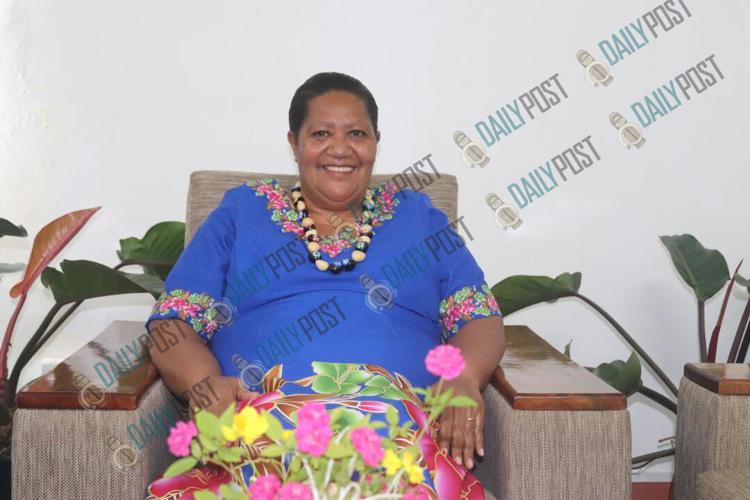

Silvia Renate Sommerlath
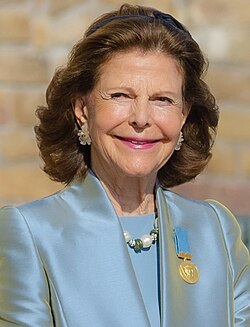
Queen Silvia of Sweden
Full Name: Silvia Renate Sommerlath
Native Name: Silvia Renate Sommerlath
Role: Queen Consort of Sweden (First Lady equivalent)
Spouse: King Carl XVI Gustaf
Children: Three — Crown Princess Victoria, Prince Carl Philip, and Princess Madeleine
Nationality: Swedish (born in Germany)
Years Active as First Lady: 19 June 1976–present
Introduction
As the wife of King Carl XVI Gustaf, Queen Silvia serves as the Queen Consort of the Kingdom of Sweden, occupying the role equivalent to a First Lady in the country’s constitutional monarchy. Having been married to the King since 1976, she is one of the world’s longest-serving royal consorts and, in 2026, marked an extraordinary 50 years as Queen of Sweden. �
Store norske leksikon +1
Queen Silvia is perhaps best known for combining the dignity of Sweden’s monarchy with a deeply humanitarian public role. A former professional interpreter who had no royal or aristocratic background, she brought an unusually modern perspective to the Swedish Crown. Over the decades, she has become particularly associated with children’s rights, dementia care, humanitarian causes, and social welfare. �
Sweden Abroad
Her remarkable longevity, international background, and dedication to social causes have made her one of the most recognizable queen consorts in the world.
Official Title: Queen Consort of the Kingdom of Sweden
As the wife of the King of Sweden, Queen Silvia serves as the nation’s Queen Consort.
Sweden is a constitutional monarchy in which the monarch’s role is primarily representative. Queen Silvia therefore has no constitutional political authority, but she performs extensive ceremonial, diplomatic, and charitable duties. She accompanies the King on state visits, participates in official ceremonies and receptions, and represents the Swedish Crown at national and international events. �
Store norske leksikon
Her independent humanitarian interests have also given her a public identity beyond simply being the King’s spouse.
Early Life
Silvia Renate Sommerlath was born on 23 December 1943 in Heidelberg, Germany. She spent part of her childhood in Brazil before returning to Germany and becoming an internationally trained interpreter. �
Store norske leksikon +1
Her life changed dramatically when she worked as a chief hostess during the 1972 Munich Olympic Games, where she met the future King Carl XVI Gustaf.
Her background was unusual for a future Swedish queen: she had no royal or noble lineage and had established a professional career before entering royal life. Her appointment as queen therefore represented a distinctly modern chapter for the Swedish monarchy.
Family Life
Silvia married King Carl XVI Gustaf on 19 June 1976 in Stockholm. The couple have three children: Crown Princess Victoria, Prince Carl Philip, and Princess Madeleine. �
Store norske leksikon
Their eldest child, Crown Princess Victoria, is the heir apparent to the Swedish throne and is expected to become Sweden’s first reigning queen since the eighteenth century. �
Wikipedia
Queen Silvia’s role as a mother and grandmother has remained an important part of her public identity, alongside her responsibilities as queen.
Becoming Queen Consort
Queen Silvia became Queen of Sweden upon her marriage to Carl XVI Gustaf on 19 June 1976.
Unlike a First Lady, whose position generally ends when her spouse leaves office, Queen Silvia’s role is connected to the monarchy itself. She has consequently remained Queen Consort for five decades, making her one of the longest-serving living royal consorts.
Her 50th anniversary as queen in June 2026 marked an extraordinary milestone in Swedish royal history. �
Newmyroyals & Hollywood Fashion
Public Role
Queen Silvia has developed an extensive portfolio of charitable and humanitarian interests.
She has placed particular emphasis on children’s rights, including efforts to protect children from abuse and exploitation. She has also become an important advocate for people affected by dementia, an issue she has highlighted through her foundation and public engagements. �
Sweden Abroad
Alongside these causes, she supports cultural, educational, healthcare, and social initiatives in Sweden and internationally.
Her humanitarian work has allowed her to cultivate a public role that is distinct from the King’s constitutional duties.
A Queen Who Modernized the Role
Queen Silvia’s story is particularly compelling because she entered royal life as a professional woman without a royal background.
Her career as an interpreter and her international upbringing gave her a broader perspective, while her subsequent work for children, families, and people living with dementia helped modernize the public image of Sweden’s queen.
Rather than simply serving as a ceremonial companion to the King, she developed causes and institutions that have become closely associated with her name.
A Symbol of Continuity and Compassion
For generations of Swedes, Queen Silvia has been a constant presence beside King Carl XVI Gustaf.
Her extraordinary tenure has spanned major changes in Swedish society, the evolution of the monarchy, and the growth of the country’s international profile. Through it all, she has maintained a reputation for dignity, warmth, and dedication to humanitarian service.
Her story is ultimately one of transformation: from a young interpreter at the Munich Olympics to a German-born woman who became one of Sweden’s longest-serving queens.
Legacy in Progress
After 50 years as Queen of Sweden, Silvia has established one of the most remarkable legacies among contemporary royal consorts.
Her commitment to children’s rights, dementia care, and humanitarian causes has given her reign as queen a distinctly compassionate character. At the same time, her international upbringing and professional background helped demonstrate that Sweden’s monarchy could embrace a more modern and outward-looking identity. �
Sweden Abroad
As Sweden looks toward a future eventually led by Crown Princess Victoria, Queen Silvia remains an enduring figure of the present monarchy—a queen remembered not only for her place beside the King, but for five decades of public service, compassion, and dedication to the Swedish people.
- 23 December 1943
- Sweden
- King Carl XVI Gustaf
- 19 June 1976–present
