



Rosario Murillo
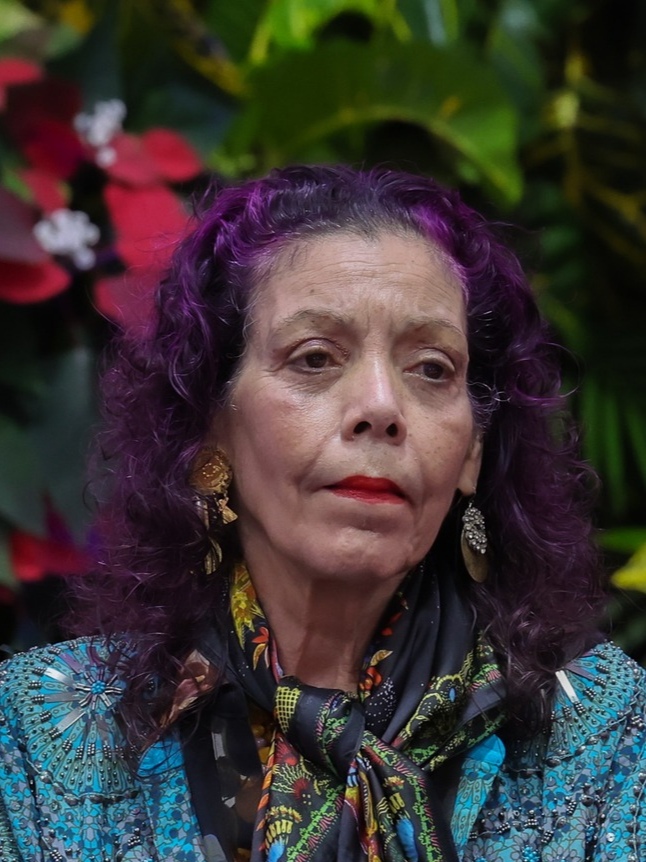
Rosario María Murillo Zambrana was born in Managua, Nicaragua, into a family with deep political and historical roots. Her father, Teódulo Murillo Molina, was a cotton grower and livestock owner, while her mother, Zoilamérica Zambrana Sandino, was a niece of the revered Nicaraguan revolutionary General Augusto César Sandino, who led resistance against U.S. military occupation in the early 20th century. This family legacy tied Murillo closely to Nicaragua’s revolutionary past and imbued her with a sense of nationalistic pride and political consciousness from an early age.
Murillo’s maternal grandmother, Zoilamérica Sandino Tiffer, was a half-sister of Augusto Nicolás Calderón Sandino, further cementing Rosario’s connection to the Sandinista revolutionary heritage. She grew up in Managua and received her early education at Colegio Teresiano, a Catholic all-girls school, which shaped her religious and moral perspectives. Later, she attended high school at Greenway Convent Collegiate School in Tiverton, Great Britain, and studied art at the Institut Anglo-Suisse Le Manoir in Switzerland, reflecting an international and cultured upbringing. Additionally, she holds certificates in English and French from the University of Cambridge and attended the National Autonomous University of Nicaragua.
Political Activism and Early Career
Murillo joined the Sandinista National Liberation Front (FSLN) in 1969, during a period of intense political struggle against the Somoza dictatorship. Her commitment to the revolutionary cause was deep and personal. She used her home in Managua’s Barrio San José Oriental as a safe haven for Sandinista guerrillas, including founding members like Tomás Borge, exemplifying her active participation in the liberation movement.
During the early 1970s, Murillo worked for La Prensa, a leading Nicaraguan newspaper, as secretary to prominent political and literary figures Pedro Joaquín Chamorro and Pablo Antonio Cuadra. Her political activism led to her arrest in 1976 in Estelí; after which she fled Nicaragua and lived in exile in Panama, Venezuela, and Costa Rica. While in Costa Rica, she helped establish Radio Sandino, a key communication tool for the Sandinista movement, and met her future husband, Daniel Ortega.
Following the 1979 overthrow of the Somoza dictatorship by the Sandinistas, Murillo returned to Nicaragua, resuming her influential role in the new government and revolutionary leadership.
Rise to Political Power
Rosario Murillo’s political power expanded notably in the late 1990s and 2000s, particularly as a staunch defender and close advisor to her husband, Daniel Ortega. Their marriage in 2005 consolidated a political partnership that would dominate Nicaraguan politics for decades. Murillo was widely perceived as the real power behind Ortega, shaping policy and strategy with her direct influence and control over government communications.
Her political role has been multifaceted: she has served as government spokesperson, minister, head of the Sandinista Association of Cultural Workers, and Communications Coordinator of the Council on Communication and Citizenry. Her official entry into executive power came when she was sworn in as Vice President of Nicaragua on 10 January 2017, the country’s second-highest office, a position she held until February 2025.
Controversies and Sanctions
Murillo’s political career has been marked by significant controversy. She was a central figure in the government during periods of social unrest and protests, notably those beginning in 2018, which resulted in hundreds of deaths, including many youths. International observers and human rights organizations have criticized her and the Ortega administration for repression and alleged human rights abuses.
In response to these allegations and repressive actions, Murillo was personally sanctioned by the European Union in August 2021. The sanctions targeted her for her role in suppressing opposition and curtailing democratic freedoms. She and several aides were also targeted by executive orders from the United States.
Co-Presidency and Constitutional Reforms
In late 2024 and early 2025, Nicaragua’s National Assembly passed constitutional reforms that extended the presidential term from five to six years and created a historic political role: co-president. Under this new arrangement, Murillo was declared co-president alongside Daniel Ortega, effectively institutionalizing her political partnership at the highest level of power. The reform became law on 18 February 2025, marking her official elevation from Vice President to co-president.
This unprecedented move highlighted Murillo’s consolidation of power and the unique nature of Nicaraguan governance under the Ortega-Murillo leadership, often characterized as a family-centered authoritarian regime.
Personal Life and Beliefs
Rosario Murillo and Daniel Ortega have eight children. Her personal life, however, has been touched by controversy, particularly regarding accusations of sexual abuse against Ortega by Murillo’s stepdaughter, Zoilamérica Narváez. Murillo publicly defended Ortega, labeling the allegations as falsehoods and distancing herself from her daughter, which has left a lingering stain on her public image within Nicaragua.
Fluent in Spanish, English, Italian, and French, and able to read German, Murillo combines her political role with a cultivated intellectual and cultural persona. She is a devout Roman Catholic with strong Marian devotion and is also known for her interest in New Age beliefs and practices, which she integrates into her personal and public life.
Literary Contributions and Cultural Influence
Murillo is also a noted poet and cultural figure, contributing several works of poetry throughout her life. Her literary output includes titles such as Gualtayán (1975), Sube a nacer conmigo (1977), Un deber de cantar (1981), Amar es combatir (1982), En espléndidas ciudades (1985), Las esperanzas misteriosas (1990), and Angel in the deluge (1992), which was translated into English by Alejandro Murguía.
As head of the Sandinista Association of Cultural Workers, she has played an active role in promoting cultural policies aligned with the Sandinista ideology, emphasizing the arts as a tool for revolutionary consciousness and social change.
In Popular Culture
Murillo’s life and political role have been subjects of scrutiny and portrayal in media. She is a central figure in the 2019 documentary Exiliada, which focuses on the personal and political struggles surrounding her stepdaughter’s accusations against Ortega, highlighting the complex intersections of family, power, and justice in Nicaragua.
Legacy and Impact
Rosario Murillo’s trajectory—from revolutionary activist to poet, government spokesperson, vice president, and co-president—reflects the deeply entwined nature of family and politics in contemporary Nicaragua. Her influence over the country’s political landscape is profound, making her one of the most powerful and controversial figures in Central America.
Her legacy remains contested: praised by supporters as a champion of the Sandinista cause and national sovereignty, yet condemned by critics for authoritarianism, suppression of dissent, and undermining democratic institutions. Her role in shaping Nicaragua’s political future is likely to be studied as an example of dynastic political power in the modern era.
Rosario Murillo’s Poetry and Cultural Influence
Poetry
Rosario Murillo is not only a political figure but also a prolific poet, whose literary works intertwine with her revolutionary ideals and personal reflections. Her poetry, rich with symbolism and emotive imagery, has been an essential part of her identity and public persona, reflecting themes of love, struggle, resistance, and spiritual awakening.
Her notable works include:
-
Gualtayán (1975) — An early collection that captures the essence of Nicaraguan life and landscapes, imbued with social commentary relevant to the era of political upheaval.
-
Sube a nacer conmigo (1977) — A powerful collection written during the height of revolutionary fervor, it explores rebirth, hope, and collective awakening, using poetic language to inspire resilience among the oppressed.
-
Un deber de cantar (1981) — This work embodies a call to action through song and poetry, intertwining the poet’s sense of duty with the revolutionary struggle.
-
Amar es combatir (1982) — An anthology that translates to “To Love is to Fight,” emphasizing the inseparable nature of love and struggle in the fight for justice and liberation.
-
En espléndidas ciudades (1985) and Las esperanzas misteriosas (1990) — Collections that delve deeper into personal and national identity, blending mysticism, culture, and revolutionary ideals.
-
Angel in the deluge (1992) — Translated into English by Alejandro Murguía, this collection exposes her poetic voice to a broader audience, conveying the spiritual and political tumult of Nicaragua through accessible language and poignant metaphors.
Murillo’s poetry often conveys a fusion of personal introspection and political commitment, embodying the Sandinista ethos while also exploring universal themes of human endurance, faith, and transformation. Her works are considered by supporters as vital cultural contributions that celebrate Nicaraguan identity and revolutionary spirit.
Role in Communications and Cultural Affairs
As a central figure in the Sandinista government, Rosario Murillo has wielded significant influence over Nicaragua’s cultural policies and state communication apparatus. Her leadership positions have included:
-
Head of the Sandinista Association of Cultural Workers: In this role, Murillo helped mobilize artists, writers, and intellectuals to align cultural production with revolutionary ideals. She promoted the arts as a form of social engagement, aiming to foster a national consciousness grounded in Sandinista principles.
-
Communications Coordinator of the Council on Communication and Citizenry: Murillo’s coordination role placed her at the helm of Nicaragua’s state-controlled media and propaganda efforts. She was instrumental in shaping the government’s narrative both domestically and internationally, managing messaging to consolidate political power and counter opposition.
-
Government Spokesperson: Her public presence as the voice of the government allowed her to communicate key policies, respond to criticism, and maintain a firm grip on public perception. This position gave her immense power to frame events and issues in ways that favored the Ortega administration.
Murillo’s approach to communications is characterized by a mix of poetic rhetoric, religious imagery, and symbolic language. She often incorporates spiritual and mystical elements into her speeches and public statements, reflecting her personal New Age beliefs and Marian devotion. This unique communication style has resonated deeply with some sectors of Nicaraguan society, enhancing her charismatic influence.
Cultural Policies and Legacy
Under her guidance, Nicaragua’s cultural institutions have promoted literature, theater, music, and visual arts that reinforce the Sandinista revolutionary narrative. She has championed cultural programs aimed at empowering marginalized communities, preserving indigenous traditions, and fostering national pride.
Murillo’s fusion of culture and politics is a hallmark of her tenure, illustrating her belief that the arts are a vital front in the broader struggle for societal transformation. This blending of aesthetics, ideology, and governance has helped sustain the Sandinista movement’s cultural relevance and perpetuate its ideological foundations.
Rosario Murillo’s poetry often blends revolutionary zeal, spiritual themes, and personal reflection. Here are excerpts and summaries of some key poems:
From Sube a nacer conmigo (1977):
This collection is a poetic call for rebirth and collective awakening during Nicaragua’s revolutionary struggle. In poems like “Nacimiento” (“Birth”), Murillo uses vivid imagery of dawn and light to symbolize hope emerging from darkness and oppression. The lines evoke the resilience of the Nicaraguan people rising anew, capturing a mix of pain and determination.
Excerpt:
“Rise with me, into the dawn where our voices join as one,
From ashes and silence, the song of freedom is born.”
From Amar es combatir (1982):
In this anthology, Murillo explores the intertwining of love and struggle, portraying love as a revolutionary act. The poems emphasize sacrifice, unity, and fighting for justice as forms of deep affection for one’s people and country.
Excerpt:
“To love is to fight in the fire of dawn,
Where hearts beat as drums for the fallen and the free.”
From Angel in the deluge (1992):
This English-translated work reveals Murillo’s mystical and spiritual side. The poems mix imagery of angels and deluges, symbolizing turmoil and divine protection. The collection reflects both the external chaos of political conflict and the internal quest for peace and meaning.
Excerpt:
“In the flood of shadows, an angel stands firm,
Guarding the flame that no storm can consume.”
Murillo’s poetry captures a unique fusion of political passion and spiritual depth, making her a voice both of Nicaragua’s revolution and its cultural soul.
Rosario Murillo’s poetry stands at the crossroads of political fervor and spiritual introspection, weaving together the threads of Nicaragua’s turbulent history with her personal quest for meaning and transcendence. Her work is notable for its lyrical intensity, revolutionary symbolism, and mystical undertones.
Political and Revolutionary Themes:
Murillo’s early poetry, especially from Sube a nacer conmigo (1977) and Amar es combatir (1982), channels the raw energy of the Sandinista revolutionary movement. She uses vivid, evocative language to call for rebirth, resilience, and collective struggle. The motifs of light breaking through darkness and voices rising in unison symbolize the awakening of the Nicaraguan people against dictatorship and oppression. Her verses often depict love not merely as a personal feeling but as an act of defiance and solidarity — loving one’s country means fighting for justice and freedom.
Spiritual and Mystical Elements:
Beyond the political, Murillo’s poetry delves deeply into spiritual reflection. Collections like Angel in the deluge (1992) reveal a more introspective, mystical dimension. She employs religious and natural imagery — angels, floods, fire, and light — to explore themes of protection, suffering, and hope amidst chaos. This spiritual layer resonates with her strong Catholic faith and New Age beliefs, infusing her work with a sense of divine presence amid political struggle.
Role in Cultural Affairs and Communications:
Beyond her poetry, Murillo has played a pivotal role in shaping Nicaragua’s cultural and communicative landscape. As head of the Sandinista Association of Cultural Workers, she championed arts and culture as vital tools of political education and social change. She helped cultivate a national artistic identity aligned with revolutionary ideals.
In communications, Murillo served as the government’s lead spokesperson and Communications Coordinator of the Council on Communication and Citizenry. Through these roles, she managed messaging to both domestic and international audiences, framing the Sandinista government’s narrative during turbulent political periods. Her influence extended to media initiatives like Radio Sandino, which became a key revolutionary mouthpiece.
Murillo’s blend of artistic expression and political communication reflects her belief in culture as a battleground for hearts and minds — where poetry, music, and media serve as weapons for both resistance and nation-building.
- 22 June 1951
- Nicaragua
- President Daniel Ortega
- 18 February 2025 - Present
